Multi-country logistics: when formatting differences become operational failures
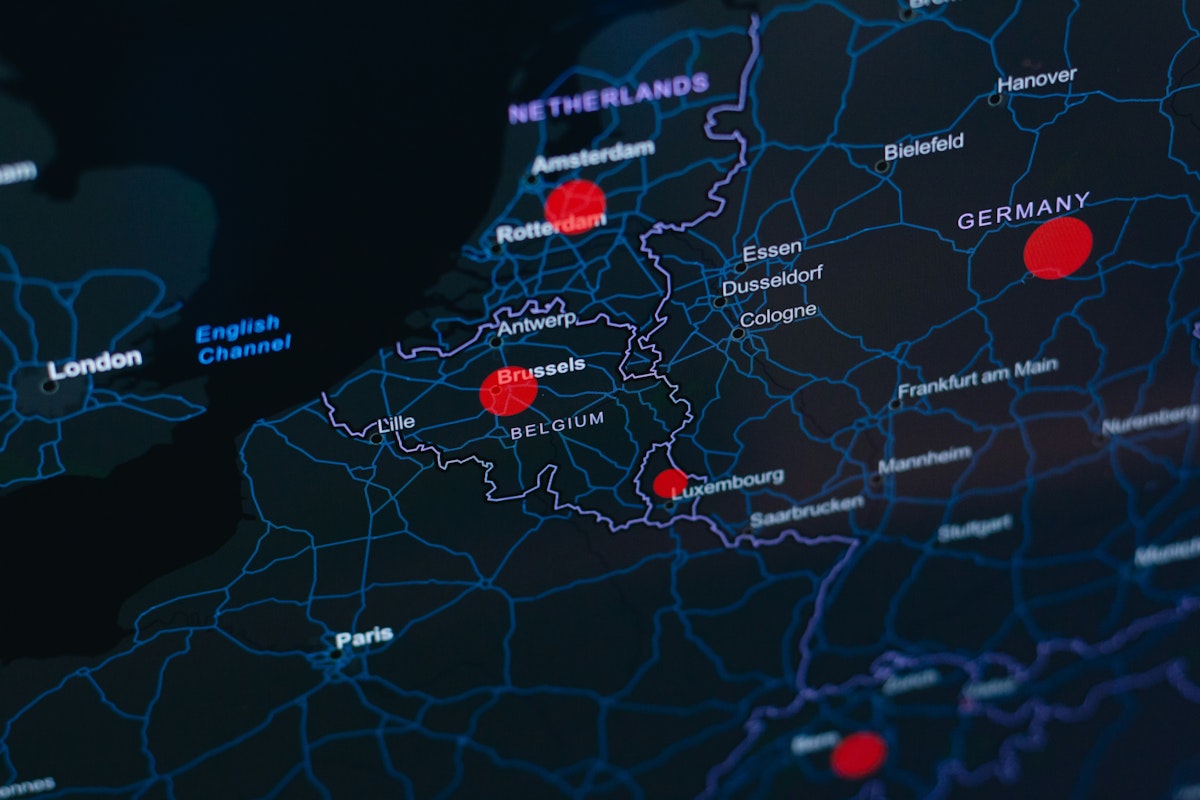
Modern supply chains rarely operate within a single country. Businesses source products from international suppliers, move goods across multiple borders, and deliver to customers, warehouses, distribution centers, and retail locations across different markets. As logistics networks become increasingly global, businesses also have to manage one deceptively complex challenge: every country has its own way of representing a location.
Address formats vary significantly around the world. Street names may come before or after building numbers, postal codes can appear in different positions, city names may have multiple accepted forms, and addresses may use different alphabets or local abbreviations. Even something as simple as the order in which an address is written can change from one country to another.
For people, these differences are usually easy to understand. For digital systems, they can create significant challenges.
When the same physical location is represented differently across countries, systems may fail to recognize that two records refer to the same place. What appears to be a simple formatting difference can therefore become a duplicate record, an incorrect route, a failed delivery, or a much larger operational problem.
There Is No Universal Address Format
One of the biggest challenges of international logistics is that there is no single global standard for how an address should look.
In one country, the house number may appear before the street name. In another, it may come afterward. Some countries use postal codes with numbers only, while others combine letters and numbers. Local abbreviations, accents, language differences, and administrative divisions add even more complexity.
Consider a company operating across several European markets. The same type of customer location may be recorded differently in Germany, France, Italy, and the Netherlands. Each version can be perfectly valid according to local conventions, but a system that relies heavily on exact text matching may interpret them as different locations.
The problem becomes even more complicated when international address data is collected from different sources. One system may use local-language information, another may translate city names, and a third may standardize the address according to its own internal rules.
The location itself hasn't changed. Only the way it is represented has.
Formatting Differences Can Create Duplicate Locations
For logistics systems, consistency matters.
If the same warehouse appears under slightly different formats in an ERP, TMS, and WMS, each platform may create its own location record. When the business operates across multiple countries, the number of possible variations increases significantly.
A street name may be abbreviated in one system and written in full in another. A city may appear in its local-language version in one database and an English version in another. Special characters may be removed during data transfers, while postal codes may be reformatted or stored differently.
Individually, these differences seem harmless. At scale, they can create hundreds or thousands of duplicate location records.
Once duplicates exist, businesses have a harder time determining how many unique customers, suppliers, facilities, or delivery points they actually have.
International Logistics Amplifies the Problem
A formatting inconsistency within one country can already create operational friction. Across multiple countries, the problem becomes significantly more complex.
International shipments often pass through several systems and organizations before reaching their final destination. A supplier may provide an address in one format, the ERP may transform it into another, the TMS may standardize it differently, and the carrier may use its own address database.
Every transformation creates another opportunity for information to become inconsistent.
If these systems cannot confidently identify the same physical location, processes that should be automated require manual verification. Transportation planners may need to check addresses before dispatch, warehouse teams may confirm destinations, and customer service teams may become involved when a carrier cannot locate a delivery point.
The more countries and systems involved, the greater the potential for these issues to multiply.
Language Differences Add Another Layer of Complexity
Formatting isn't the only challenge.
International location data can also contain multiple languages, scripts, and naming conventions. A location may have an official local name as well as an internationally recognized version. Transliteration can create additional variations when addresses move between different writing systems.
For example, a location may be stored using local characters in one system and Latin characters in another. Both records may be correct, but a basic matching process may fail to recognize that they represent the same physical location.
This can have a direct impact on logistics operations. If a TMS cannot confidently match a destination to the correct location record, route planning and delivery execution may be affected. If an ERP and WMS maintain different versions of the same supplier or warehouse, reporting and inventory processes can become fragmented.
The challenge is therefore not simply translating an address. It is understanding that different representations can still refer to the same real-world location.
When Formatting Differences Become Operational Failures
The most important issue isn't the formatting itself. It is what happens when systems fail to interpret those differences correctly.
A duplicate warehouse record can lead to fragmented inventory information. An inconsistent delivery address can cause routing problems. An incorrect postal code can send a shipment toward the wrong area. A location that cannot be matched across systems may require manual intervention before a shipment can even be dispatched.
These problems create costs across the supply chain, including additional transportation, delayed deliveries, manual data corrections, increased customer service activity, and reduced operational visibility.
In other words, a data formatting problem can quickly become a logistics problem.
Standardization Does Not Mean Making Every Country Look the Same
The solution isn't to force every international address into one rigid format.
Local address conventions exist for a reason, and logistics systems need to preserve the information required to operate effectively in each market. Instead, businesses need a common data foundation that can understand and connect different representations of the same location.
This means recognizing variations in formatting, language, abbreviations, and local conventions while maintaining a consistent underlying location identity.
A warehouse in Germany should still be identifiable as the same warehouse regardless of whether its address appears in a local ERP record, a global TMS, or a carrier platform.
The objective isn't to make every address identical. It is to make every system understand when different address records represent the same physical location.
Building Reliable Location Data Across Borders
Organizations operating internationally need a location data strategy that goes beyond simple address formatting.
This includes validating addresses according to local standards, matching records across countries and systems, identifying duplicates, maintaining consistent location identifiers, and preserving the operational information required by each platform.
A strong location data foundation allows businesses to maintain local accuracy while still creating a global view of their logistics network.
This becomes particularly important when organizations expand into new markets, acquire international businesses, or integrate new logistics partners. Without a consistent approach to location data, every new country and every new system introduces another layer of complexity.
With one, businesses can scale their logistics operations without continuously rebuilding their understanding of where everything is located.
Why Businesses Must Address This Now
Global supply chains are becoming more connected, while the number of systems managing location information continues to grow. International businesses need to exchange location data between internal platforms, suppliers, carriers, customers, and logistics partners on a daily basis.
At the same time, technologies such as AI, automation, route optimization, and predictive analytics increasingly depend on standardized and reliable location information.
If businesses cannot confidently identify the same physical location across countries and systems, these technologies will continue to operate with incomplete or inconsistent information.
Managing international location data correctly is therefore not simply a technical requirement. It is becoming essential to maintaining operational efficiency as businesses expand globally.
Conclusion
Multi-country logistics introduces a level of complexity that goes far beyond moving goods across borders. Every country brings its own address formats, languages, conventions, and data standards, and those differences can create serious challenges when location information moves between systems.
A warehouse, supplier, or customer remains the same physical location regardless of how its address is written. The challenge is ensuring that every system involved in the supply chain understands that connection.
By standardizing, validating, and matching location data across countries and platforms, businesses can reduce duplicates, prevent operational errors, improve visibility, and create a more reliable foundation for international logistics.
The goal is not to eliminate local differences. It is to create continuity across them.
And that is where Logistics Continuity becomes critical: ensuring that a location remains the same trusted location as its data moves from one system, country, partner, and logistics process to another.