Why last-mile delivery is the most exposed point to bad location data
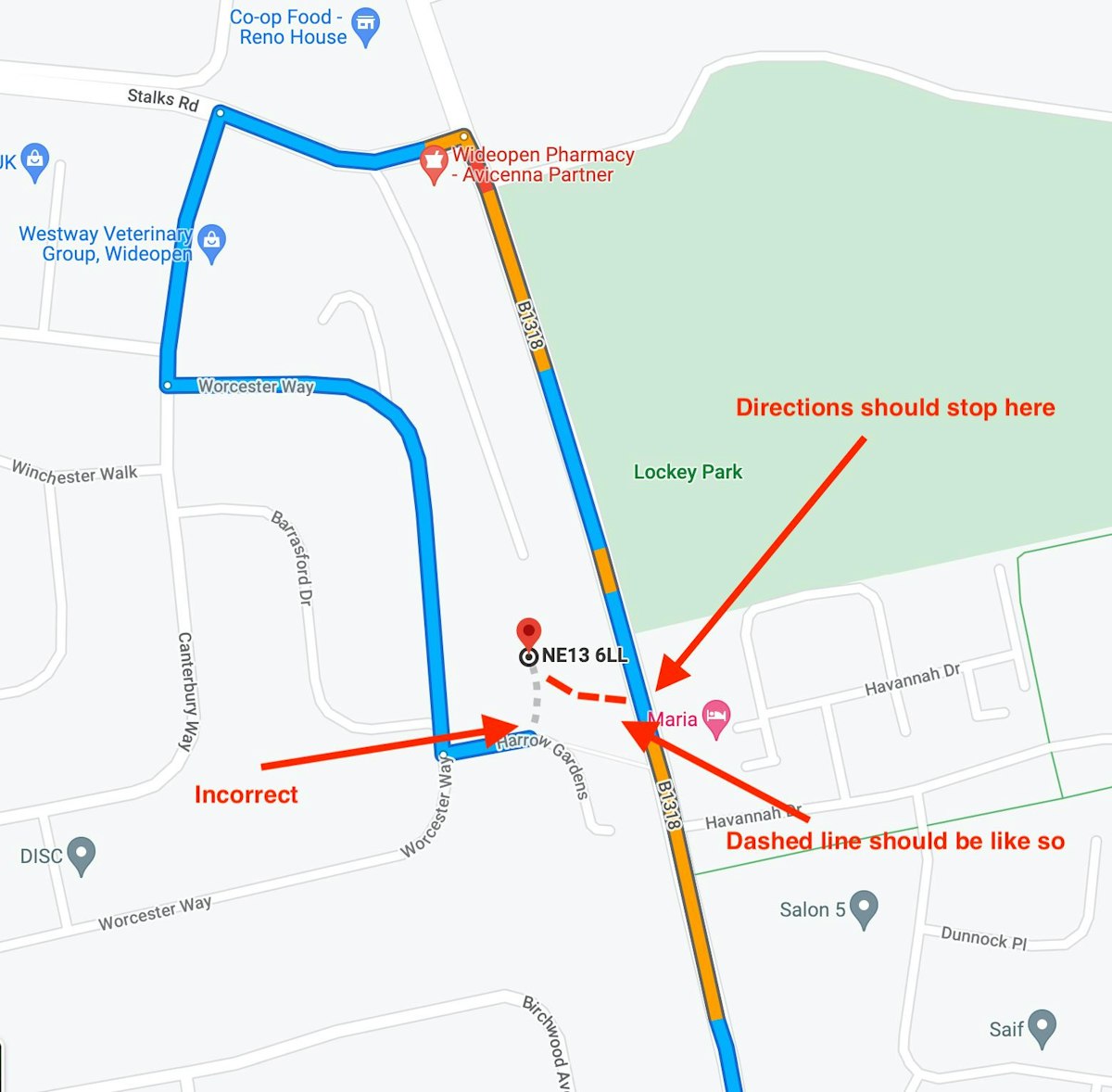
Over the past decade, last-mile delivery has become one of the most important—and most challenging—stages of the supply chain. As e-commerce continues to grow and customer expectations for fast, accurate deliveries increase, businesses are investing heavily in route optimization, real-time tracking, delivery notifications, and automated logistics solutions.
Despite these technological advancements, many delivery failures still have a surprisingly simple cause: poor location data.
The last mile is where every decision made earlier in the supply chain is put to the test. If location information is inaccurate, incomplete, or inconsistent, there is little opportunity to correct it before the shipment reaches the customer. What may have started as a small data issue quickly becomes a missed delivery, a delayed shipment, or a poor customer experience.
In this blog post, we will explore why last-mile delivery is particularly vulnerable to bad location data and why businesses should view location accuracy as a critical component of customer service.
The Last Mile Depends on Precision
Unlike earlier stages of the supply chain, last-mile delivery leaves very little room for error.
Warehouse operations may be able to correct an inventory discrepancy before an order is shipped. Transportation planners can adjust routes when unexpected delays occur. However, once a delivery vehicle reaches its destination, the driver relies almost entirely on accurate location information to complete the delivery successfully.
If the address is incorrect, missing important details, or difficult to identify, every minute spent searching for the correct location increases operational costs and reduces delivery efficiency.
A missing apartment number, an outdated business address, or unclear delivery instructions may seem insignificant during order processing. For a delivery driver managing dozens or even hundreds of stops in a single day, these small details can have a major impact.
Small Errors Multiply Throughout the Route
One inaccurate address rarely affects just one delivery.
Delivery routes are carefully optimized to maximize efficiency. Every stop is scheduled based on estimated travel times, delivery windows, and customer commitments.
When one delivery takes longer than expected because of poor location data, the entire route can be affected. Drivers may miss scheduled delivery windows, subsequent customers experience delays, and transportation planners may need to make real-time adjustments to recover the schedule.
The result is a ripple effect that extends well beyond the original address error.
As delivery volumes continue to increase, even small location inaccuracies can significantly reduce the efficiency of an entire transportation network.
Customer Expectations Have Never Been Higher
Modern customers expect more than simply receiving their orders.
They expect accurate delivery estimates, real-time tracking, flexible delivery options, and reliable communication throughout the process. These expectations leave little tolerance for location-related errors.
When deliveries are delayed or fail because drivers cannot locate the correct destination, customers rarely blame inaccurate location data. Instead, they associate the experience with the retailer, manufacturer, or logistics provider.
This can lead to:
- Increased customer complaints
- Lower customer satisfaction
- Negative online reviews
- Higher customer service costs
- Reduced customer loyalty
- Lost future business
In competitive markets, customer experience has become a key differentiator. Every failed delivery represents not only an operational cost but also a potential loss of trust.
Urban Logistics Makes the Challenge Even Greater
The growth of urban delivery networks has made location accuracy more important than ever.
Large cities present unique challenges for delivery operations. Apartment complexes, office buildings, shared entrances, restricted access areas, and multi-level facilities often require detailed location information that goes beyond a standard street address.
For example, a driver may successfully navigate to the correct building but still struggle to identify the appropriate entrance, loading area, reception desk, or delivery point.
Without detailed and accurate location data, valuable time is lost searching for access points or contacting customers for additional instructions.
As same-day and next-day delivery services become more common, businesses cannot afford these delays.
Technology Can Only Perform as Well as the Data It Uses
Many organizations invest in advanced technologies to improve last-mile performance.
Artificial intelligence optimizes delivery routes. GPS systems provide navigation. Real-time tracking improves visibility. Automated dispatching increases efficiency.
However, every one of these technologies depends on one essential ingredient: reliable location data.
If the destination is inaccurate, outdated, or incomplete, even the most sophisticated delivery systems cannot guarantee successful execution.
Technology can calculate the fastest route to the wrong location just as efficiently as it can calculate the fastest route to the correct one.
This is why improving location data quality often delivers greater operational benefits than investing in additional technology alone.
The Hidden Costs of Failed Last-Mile Deliveries
Failed last-mile deliveries create costs that extend far beyond transportation.
Businesses may incur:
- Additional fuel expenses
- Overtime costs
- Redelivery attempts
- Increased customer support workload
- Reverse logistics costs
- Refunds or compensation
- Lost sales opportunities
- Damage to brand reputation
These costs are often spread across multiple departments, making them difficult to measure accurately. As a result, many organizations underestimate the financial impact of poor location data.
In reality, a single failed delivery can generate costs that far exceed the value of the shipment itself.
Building a More Reliable Last Mile
Improving last-mile performance begins with improving the quality of location data throughout the supply chain.
Organizations should focus on:
- Validating customer addresses before shipment
- Standardizing location records across systems
- Enriching addresses with delivery-specific information
- Eliminating duplicate location records
- Maintaining consistent location data across ERP, WMS, and TMS platforms
- Continuously monitoring and updating location information
By establishing a reliable location data foundation, businesses can reduce failed deliveries, improve route efficiency, and deliver a more consistent customer experience.
The objective is not simply to improve navigation—it is to ensure every delivery begins with accurate and trusted information.
Why Businesses Must Act Now
Last-mile delivery has become one of the most visible aspects of the customer experience.
As delivery expectations continue to rise, organizations that continue operating with poor location data will face increasing transportation costs, lower customer satisfaction, and reduced operational efficiency.
Businesses that prioritize location data quality today will be better positioned to support faster deliveries, improve customer trust, and maximize the value of their logistics technology investments.
In an increasingly competitive marketplace, reliable location data has become a key driver of last-mile success.
Conclusion
The last mile is the point where poor location data has its greatest impact.
Even small inaccuracies can lead to failed deliveries, delayed routes, increased costs, and dissatisfied customers. Because there are few opportunities to correct location errors once a shipment reaches its destination, the quality of the underlying data becomes critical.
Organizations that invest in accurate, standardized, and context-rich location data will be able to deliver more efficiently, improve customer experiences, and build stronger, more resilient logistics operations.