Warehouse inefficiencies caused by incorrect inbound/outbound location data
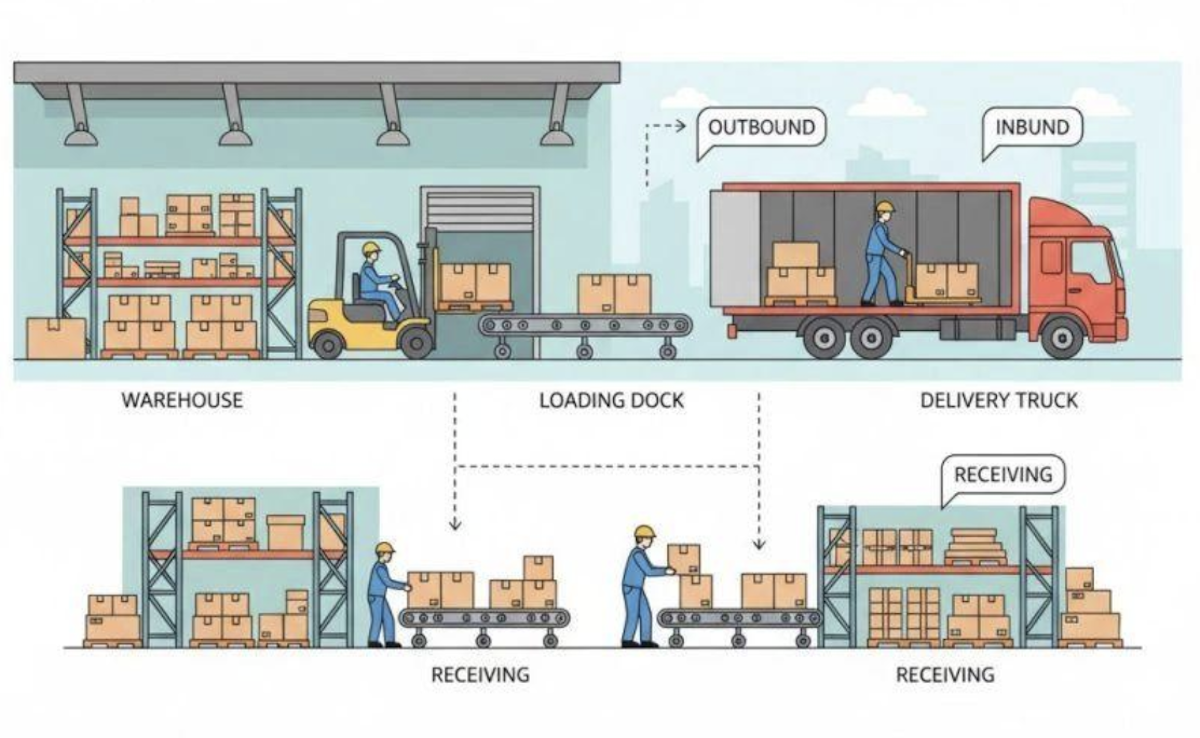
Warehouses are at the heart of modern supply chains. They receive goods from suppliers, store inventory, fulfill customer orders, and coordinate outbound shipments to distribution centers, retailers, and end customers. Every one of these activities depends on accurate and reliable location data.
While businesses often associate location data with transportation and deliveries, its role inside the warehouse is just as important. Incorrect inbound and outbound location data can disrupt receiving processes, delay order fulfillment, increase labor costs, and reduce overall warehouse efficiency.
As warehouses become increasingly automated and customer expectations continue to rise, even small data inaccuracies can create significant operational challenges. In this blog post, we will explore how poor location data affects warehouse operations and why businesses should treat location data as a critical operational asset.
Every Warehouse Process Starts with Accurate Data
Warehouse operations begin long before products are physically received.
Inbound shipments are planned using supplier locations, delivery schedules, warehouse entrances, unloading points, and receiving dock information. Outbound operations rely on customer addresses, distribution center locations, carrier destinations, and shipping instructions.
If any of this location information is inaccurate or incomplete, warehouse teams immediately begin working with unreliable data.
For example, an inbound shipment assigned to the wrong receiving dock can create congestion and delays. An outbound shipment linked to an outdated customer location may require additional verification before it can leave the warehouse.
When these issues occur repeatedly, they slow down the entire operation.
The Impact on Inbound Operations
Efficient inbound logistics depend on knowing exactly where shipments are coming from and where they should be received.
Incorrect supplier locations, inconsistent delivery addresses, or outdated facility information can cause receiving teams to spend valuable time resolving avoidable issues. Deliveries may arrive at the wrong entrance, carriers may struggle to locate unloading areas, or shipments may be assigned to incorrect receiving processes.
These disruptions create a ripple effect throughout warehouse operations.
Receiving delays postpone inventory availability, disrupt replenishment schedules, and reduce warehouse capacity. As a result, downstream processes such as picking, packing, and shipping are also affected.
What appears to be a simple location data issue quickly becomes an operational bottleneck.
Outbound Errors Affect More Than Deliveries
Outbound warehouse operations rely heavily on accurate destination information.
Before an order is shipped, warehouse systems use location data to determine carrier assignments, shipping labels, routing information, and delivery schedules. If destination data is inaccurate, warehouse teams often need to pause operations to verify shipment details or correct records.
In some cases, incorrect outbound location data results in shipments being sent to the wrong destination entirely. In others, incomplete delivery information causes delays after the shipment has already left the warehouse.
These errors increase handling costs, create unnecessary rework, and reduce the warehouse's ability to process orders efficiently.
Ultimately, inaccurate outbound location data impacts both operational performance and customer satisfaction.
Manual Corrections Reduce Productivity
One of the biggest hidden costs of poor location data is the amount of manual work it creates.
Warehouse employees frequently spend time confirming addresses, correcting shipment records, updating customer information, or contacting carriers to clarify delivery locations. These activities divert resources away from core warehouse operations.
Over time, manual corrections become part of the daily workflow.
While individual adjustments may only take a few minutes, they accumulate across hundreds or thousands of shipments, reducing productivity and increasing labor costs.
Instead of focusing on improving efficiency, warehouse teams become occupied with fixing preventable data issues.
Automation Depends on Reliable Location Data
Modern warehouses increasingly rely on automation to improve speed, accuracy, and operational efficiency.
Technologies such as automated storage systems, robotics, warehouse management software, barcode scanning, and artificial intelligence all depend on accurate location data to perform effectively.
If inbound or outbound location information is inconsistent, automated systems cannot operate as intended.
For example, incorrect destination data may generate inaccurate shipping labels, while inconsistent warehouse location records can interfere with inventory movements or automated picking processes.
Rather than improving efficiency, automation built on poor data often exposes existing weaknesses in warehouse operations.
This is why high-quality location data is becoming a prerequisite for successful warehouse automation.
Poor Data Limits Operational Visibility
Warehouse managers rely on accurate data to monitor performance, allocate resources, and identify opportunities for improvement.
However, when location data is duplicated, inconsistent, or outdated, operational reporting becomes less reliable.
Businesses may struggle to answer questions such as:
- Which receiving docks experience the highest volume?
- Which shipping destinations generate the most exceptions?
- Where are warehouse bottlenecks occurring?
- Which suppliers consistently deliver on time?
- How efficiently are outbound shipments being processed?
Without accurate location data, performance metrics become distorted, making it more difficult to identify operational improvements or make informed business decisions.
Reliable data is essential not only for executing warehouse operations but also for continuously optimizing them.
Building a More Efficient Warehouse
Improving warehouse efficiency begins with improving the quality of the data that supports warehouse operations.
Businesses should focus on:
- Standardizing inbound and outbound location records
- Validating supplier and customer addresses
- Eliminating duplicate location entries
- Maintaining consistent data across warehouse, transportation, and ERP systems
- Enriching location records with operational details such as dock assignments, access instructions, and facility information
By establishing reliable location data, organizations reduce manual work, improve operational visibility, and create a stronger foundation for warehouse automation.
The result is faster receiving, more efficient order fulfillment, and improved overall supply chain performance.
Why Businesses Must Address the Problem Now
Warehouses are under increasing pressure to process more orders, handle greater inventory volumes, and deliver faster than ever before.
At the same time, labor shortages, rising transportation costs, and growing customer expectations leave little room for operational inefficiencies.
Businesses that continue operating with poor inbound and outbound location data will find it increasingly difficult to achieve the speed and accuracy required in today's logistics environment.
Those that invest in improving location data quality will be better positioned to optimize warehouse operations, support automation initiatives, and build more resilient supply chains.
Conclusion
Warehouse inefficiencies are often attributed to labor shortages, equipment limitations, or operational complexity. However, many of these challenges originate much earlier—with inaccurate or inconsistent inbound and outbound location data.
Poor location data slows receiving operations, disrupts order fulfillment, increases manual work, limits automation, and reduces visibility across warehouse activities. As warehouses continue to evolve into highly connected and technology-driven environments, maintaining accurate location information has become a strategic necessity.
Organizations that prioritize location data quality will not only improve warehouse efficiency but also strengthen the performance of their entire supply chain.