Location data is not the problem - what happens when it breaks is.
Over the past few years, location data has become a central component of modern supply chain operations. Businesses rely on it to plan transportation routes, manage warehouses, optimize inventory, and ensure products reach customers efficiently. As supply chains become more connected and increasingly digital, the importance of accurate location data continues to grow.
However, many organizations approach location data challenges from the wrong perspective. They view inaccurate addresses, duplicate records, or incomplete location information as isolated data quality issues rather than recognizing the broader operational consequences these problems create.
The reality is that location data itself is rarely the problem.
The real problem begins when location data breaks—and the effects spread throughout the entire supply chain.
In this blog post, we will explore why businesses often underestimate the impact of location data failures, how small inaccuracies evolve into major operational challenges, and why organizations need to shift their focus from data correction to operational resilience.
Location Data Errors Rarely Stay in One Place
Unlike many business data issues, location data problems rarely remain isolated.
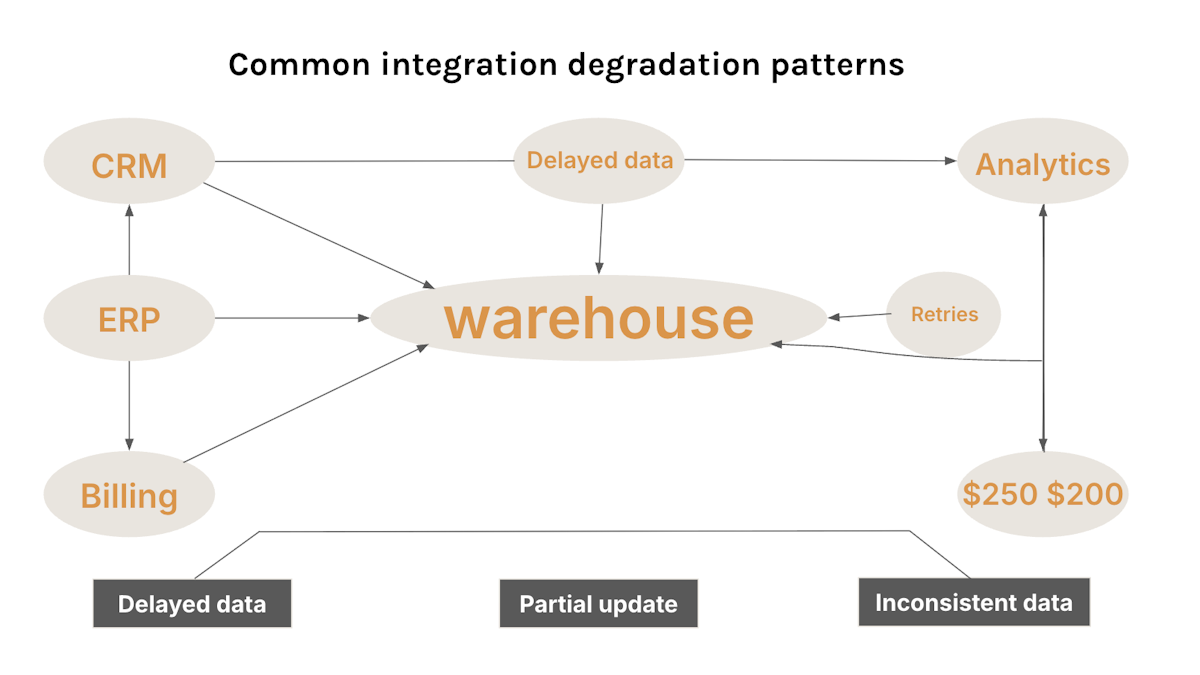
A customer address entered incorrectly in an ERP system may be transferred to a warehouse management system, replicated in a transportation management platform, and shared with external logistics providers. What starts as a small error can quickly propagate across multiple systems and business processes.
For example, a missing building number or an incorrectly formatted location may initially appear insignificant. However, once that information enters operational workflows, it can affect routing decisions, warehouse operations, delivery execution, reporting accuracy, and customer communications.
Because supply chains are interconnected systems, even minor location data errors can create a chain reaction of inefficiencies.
The challenge is not the original error itself. The challenge is how far that error travels.
Small Data Problems Become Large Operational Problems
One of the reasons businesses underestimate location data quality issues is because the immediate impact often appears minor.
A delivery may simply arrive late. A warehouse operator may spend a few extra minutes verifying a location. A customer service representative may need to manually confirm an address.
Viewed individually, these incidents seem manageable.
However, when these small disruptions occur repeatedly across hundreds, thousands, or even millions of transactions, they create significant operational challenges. Organizations begin experiencing:
- Increased transportation costs
- Higher fuel consumption
- Delivery delays
- Warehouse inefficiencies
- Duplicate records
- Increased manual intervention
- Reduced productivity
- Customer dissatisfaction
- Poor visibility across operations
The true cost of poor location data is rarely the initial error. It is the accumulation of all the operational consequences that follow.
Modern Supply Chains Amplify Data Failures
Today's supply chains are more interconnected than ever before.
Businesses operate across multiple countries, collaborate with numerous suppliers and logistics partners, and rely heavily on digital platforms to coordinate operations. At the same time, customer expectations for speed, transparency, and accuracy continue to increase.
In this environment, even small disruptions can have widespread consequences.
For example, an incorrect warehouse location may impact transportation planning, inventory allocation, labor scheduling, and customer delivery commitments simultaneously. A duplicate customer location record may create inconsistencies across forecasting, reporting, and fulfillment systems.
As supply chains become increasingly automated, the speed at which data errors spread also increases.
Modern technology allows organizations to process information faster than ever before. Unfortunately, it also allows them to distribute inaccurate information faster than ever before.
Why Businesses Often Fail to Identify the Root Cause
One of the most difficult aspects of location data problems is that their consequences rarely appear where the original error occurred.
A transportation team may identify increased delivery costs. Warehouse managers may notice operational inefficiencies. Customer service teams may experience growing complaint volumes. Leadership may observe declining performance metrics.
However, few organizations immediately connect these issues back to location data quality.
Instead, businesses often treat the symptoms:
- They adjust transportation routes.
- They increase operational staffing.
- They implement additional manual controls.
- They invest in new software tools.
- They redesign operational processes.
While these measures may provide temporary relief, they rarely address the underlying cause.
As a result, organizations continue spending resources managing operational disruptions instead of preventing them.
The Hidden Impact on Strategic Decision-Making
The consequences of broken location data extend beyond daily operations.
Modern businesses increasingly rely on data-driven decision-making to optimize supply chains, manage inventory, expand distribution networks, and improve customer service. However, when location data is inaccurate or inconsistent, the quality of these decisions suffers.
For example, businesses may:
- Misidentify high-demand regions
- Place inventory in suboptimal locations
- Underestimate transportation costs
- Miscalculate network performance
- Overlook operational bottlenecks
- Develop inaccurate forecasts
Poor location data not only creates operational inefficiencies—it also reduces an organization's ability to plan effectively for the future.
This hidden strategic impact is often far more costly than the operational disruptions themselves.
Moving Beyond Data Quality
Traditionally, organizations have approached location data challenges as a data cleansing exercise. While cleaning and correcting records remains important, modern supply chains require a broader perspective.
Businesses must recognize that location data management is fundamentally an operational challenge.
The objective is not simply to maintain accurate addresses. The objective is to ensure that location information remains consistent, reliable, and usable throughout the entire supply chain lifecycle.
This requires organizations to think beyond individual systems and focus on the continuity of data across business processes, operational teams, and technology platforms.
Only then can businesses prevent small data issues from becoming major operational problems.
Why Businesses Must Act Now
As supply chains become increasingly digital, automated, and interconnected, the cost of broken location data will continue to rise.
Emerging technologies such as artificial intelligence, predictive analytics, autonomous transportation, and advanced warehouse automation all depend on accurate and consistent location information. Without a reliable foundation of data, organizations risk limiting the value of their technology investments.
Businesses that proactively address location data quality today will be better positioned to improve operational efficiency, reduce costs, and build more resilient supply chains for the future.
Those that fail to act may find themselves continuously managing the consequences of problems they cannot easily identify.
Conclusion
Location data itself is not the problem.
The real challenge begins when inaccurate, incomplete, or inconsistent location information enters operational systems and starts affecting business processes. What appears to be a minor data issue can quickly evolve into transportation inefficiencies, warehouse disruptions, increased costs, poor customer experiences, and flawed strategic decisions.
As supply chains continue to evolve, businesses must shift their focus from simply managing location data to understanding the operational consequences when that data breaks.
Because in modern logistics, the true cost of poor location data is not the error itself—it is everything that happens after.