Evolution of a supply chain, the growing need of location of data
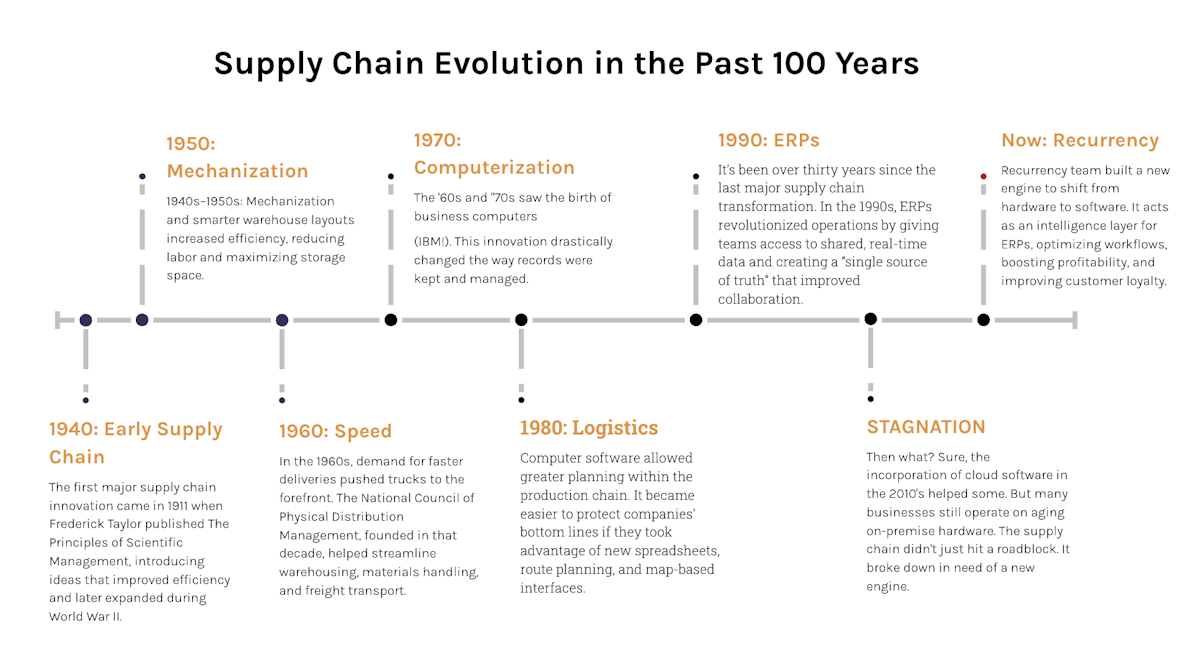
Supply chains are the core of modern commerce, ensuring that goods flow seamlessly from manufacturers to consumers. However, the way supply chains operate today is the result of decades of evolution, shaped by globalization, technology, and shifting customer expectations. What once revolved around local deliveries and simple operations has transformed into a sophisticated, interconnected web that spans continents.
As supply chains evolve, so do their challenges—and opportunities. Understanding how they’ve developed over time is key to appreciating the critical role accurate location data plays in managing them effectively. This is the topic we will cover in this blog post so keep reading.
The Early Days: Local and Linear Supply Chains
In the past, supply chains were largely localized and linear. Businesses sourced materials from nearby suppliers, produced goods in small quantities, and distributed them within a limited radius. The focus was on simplicity and direct relationships.
For example, a small manufacturing company in the early 20th century might have sourced raw materials from nearby regions and distributed products directly to local retailers. There was little need for complex logistics, and the supply chain’s efficiency was rarely questioned.
However, this model began to shift as industrialization and globalization expanded the scale of operations. Businesses no longer confined themselves to local resources or markets. Instead, they began seeking cost advantages by sourcing materials internationally, producing at larger scales, and distributing goods across vast geographies.
The Rise of Global Supply Chains
Globalization in the late 20th century marked a turning point for supply chains. Companies began outsourcing manufacturing to countries with lower labor costs, importing raw materials from diverse regions, and selling their products worldwide. While this opened up new opportunities for growth, it also introduced significant complexity.
For instance, a smartphone manufacturer might source components from multiple countries—semiconductors from Taiwan, screens from South Korea, and batteries from China—before assembling the final product in Vietnam and shipping it to global markets. This level of complexity requires seamless coordination and real-time data to ensure that every component arrives on time
Technology and Digital Transformation in Supply Chains
Technology has played a pivotal role in shaping modern supply chains, enabling businesses to manage complexity and scale like never before. The introduction of Enterprise Resource Planning (ERP) systems allowed companies to integrate processes like procurement, inventory management, and shipping into a unified framework. This digitization brought greater visibility and control, reducing inefficiencies and improving decision-making.
E-commerce platforms further accelerated the need for faster, more dynamic supply chains. Companies like Amazon set new standards for delivery speed and convenience, forcing competitors to rethink their logistics strategies. To keep up, businesses turned to technologies like real-time tracking, predictive analytics, and IoT (Internet of Things) devices to monitor goods throughout the supply chain.
For instance, a global food retailer uses IoT sensors to monitor the temperature of perishable goods during transit. This ensures compliance with safety regulations and reduces the risk of spoilage, saving both money and resources. Similarly, predictive analytics helps businesses forecast demand more accurately, reducing stockouts and optimizing inventory levels.
The Shift Toward Resilience and Sustainability
The COVID-19 pandemic brought global supply chains to the forefront of public attention, exposing vulnerabilities and prompting businesses to rethink their strategies. Border closures, factory shutdowns, and shifting consumer demand created unprecedented disruptions, highlighting the need for more resilient and adaptable supply chains.
One response has been the diversification of suppliers. Instead of relying on a single region or partner, businesses are spreading their risk by working with multiple suppliers across different geographies. Another trend is nearshoring or reshoring—bringing production closer to end markets to reduce lead times and improve control.
Sustainability has also emerged as a critical focus area. Companies are under increasing pressure to reduce their carbon footprint and adopt environmentally friendly practices. This has led to initiatives such as optimizing transportation routes to cut emissions, sourcing materials from ethical suppliers, and investing in renewable energy for production facilities.
The Importance of Data in Modern Supply Chains
As supply chains evolve, the role of data has become increasingly important. Accurate data is no longer a “nice-to-have”—it’s essential for maintaining efficiency, transparency, and resilience. Location data, in particular, plays a crucial role in helping businesses understand the physical structure of their supply chains and make smarter decisions. If you want to find out more about the importance of location data, you can read our other blog post here.
For example, accurate location data enables businesses to:
Optimize Routes: By mapping out transportation networks, companies can reduce travel distances, fuel consumption, and delivery times.
Improve Collaboration: Sharing precise location information with stakeholders—such as suppliers, warehouses, and transportation providers—reduces misunderstandings and streamlines operations.
Manage Risk: Location data helps identify potential vulnerabilities, such as areas prone to natural disasters or geopolitical instability, allowing businesses to mitigate risks proactively.
A multinational logistics provider, for instance, used location data to identify inefficiencies in its delivery routes. By optimizing its network, the company significantly reduced transportation costs and improved delivery performance, ultimately enhancing customer satisfaction.
What the Future Holds for Supply Chains
The evolution of supply chains shows no signs of slowing down. Emerging technologies like AI, autonomous vehicles, and blockchain are poised to further transform how goods are produced, stored, and delivered. These advancements promise to increase efficiency and transparency but will depend on accurate data to function effectively.
Collaboration will also play a key role in the future of supply chains. Businesses are increasingly working together to share data and resources, creating networks that are more integrated and resilient. For example, companies in the retail sector are forming partnerships to share warehouse space and optimize last-mile deliveries, reducing costs and emissions.
However, as supply chains become more complex, maintaining accurate and up-to-date data will be one of the biggest challenges. Businesses that invest in robust data management systems today will be better equipped to navigate future disruptions and capitalize on new opportunities.
Conclusion
The evolution of supply chains is a story of growth, innovation, and adaptation. From simple, local operations to sprawling global networks, each stage of this journey has introduced new challenges and opportunities. Today, as businesses face growing complexity and uncertainty, accurate location data has emerged as a critical enabler of success.
By embracing technology, prioritizing sustainability, and investing in data-driven solutions, companies can build supply chains that are not only efficient but also resilient and future-ready. The businesses that thrive in the years ahead will be those that understand the importance of accurate data and use it to drive smarter, more strategic decisions.